When considering estate planning, hiring a trust lawyer is crucial for navigating complex legal processes and ensuring your assets are well managed. Making an informed choice about the trust attorney you hire can have significant long-term impacts on your estate management. Here are some critical questions to ask before hiring a trust lawyer.
What are the lawyer’s qualifications and experience?
It is essential to start by examining the educational qualifications of a trust lawyer, as it can greatly influence their legal proficiency. A law degree from a reputable institution can be an initial indicator of their foundational knowledge in the field. Certifications in specialized areas of trust law enhance their credentials and illustrate a commitment to staying updated with legal advancements.
A lawyer’s continuous professional development through workshops or courses offers added assurance of their expertise. This commitment is essential as laws are constantly evolving, and staying informed on these changes is crucial for effective legal advice. Such dedication can be indicative of their ability to handle complex trust matters with professionalism.
The experience of a lawyer in dealing with trust cases directly impacts the quality of service you can expect. Experiential learning through real-world cases is irreplaceable and often provides deeper insights that academic learning alone cannot. By assessing how long they have practiced in the field, you can gauge their capability and reliability.
Examining the diversity of cases a lawyer has managed provides insight into their problem-solving skills and adaptability. For instance, experience with high-net-worth estates, family trusts, or charitable trusts can be advantageous depending on your specific needs. This becomes especially important when navigating unique or intricate estate planning situations.
How does the lawyer structure their fees?
Understanding a lawyer’s fee structure is critical to making an informed hiring decision. Legal fees can vary widely depending on several factors, including complexity, location, and the lawyer’s reputation. Discrepancies in fee arrangements, like hourly, flat, or contingent, can significantly impact your budget planning.
Transparency in fees not only builds trust but also sets clear expectations from the beginning. It allows you to avoid unexpected charges that can strain your finances. A lawyer who willingly provides a detailed estimate is more likely to offer reliable and straightforward services, thereby strengthening the client-lawyer relationship.
Additional costs beyond the lawyer’s core fee should not be overlooked. Miscellaneous charges like court filing fees or costs for external consultations can sometimes surprise clients. Administrative expenses or extra services offered might incur extra charges that add up over time, impacting your initial budget assumptions.
Inquiring about these expenses upfront avoids misunderstandings and aligns both parties on the financial expectations. Lawyers who are transparent about potential extra expenses demonstrate ethical practices and respect for their clients’ financial planning. Understanding the full scope of potential costs is key to effective financial planning.
What is the lawyer’s approach to client communication?
Regular communication is essential in maintaining a transparent and efficient client-lawyer relationship. It assures clients that their cases are being handled with diligence and care. Knowing how often you can expect updates helps you stay informed and involved in the process, which is crucial for making timely decisions.
A lawyer who offers multiple channels of communication increases their accessibility, thus enhancing the client experience. Flexible communication options such as email, phone, and in-person meetings demonstrate their commitment to accommodating your preferences. These options provide flexible choices to suit diverse client preferences, ensuring that all parties stay connected effectively.
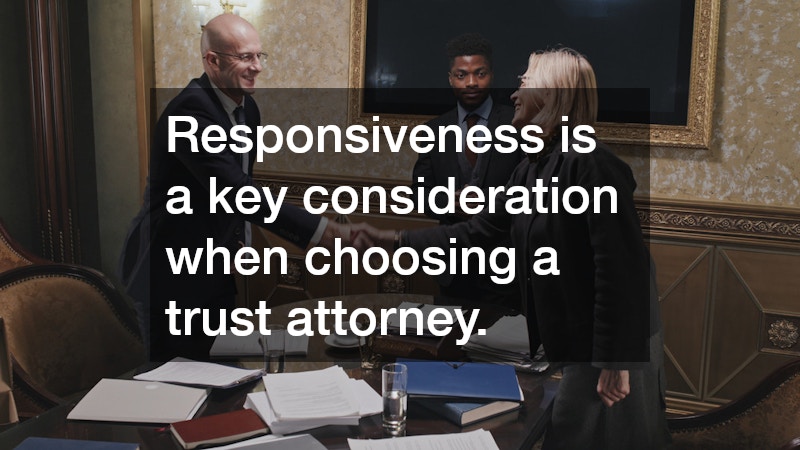
Responsiveness is a key consideration when choosing a trust attorney. It can greatly affect the efficiency and smooth operation of handling your matters. Understanding their typical response time can impact your level of satisfaction and trust.
A proactive lawyer who responds promptly to inquiries demonstrates dedication and professionalism. Prompt communication is critical during sensitive or complex situations that could require immediate attention. This is especially vital during emergencies or time-sensitive situations where quick actions are required to mitigate risks or capitalize on opportunities.
Choosing the right trust lawyer is a pivotal decision in securing your estate’s future. The right lawyer not only provides expert legal counsel but also navigates the complexities of the legal landscape effectively. By asking the right questions, you can ensure your lawyer’s expertise aligns with your needs and provides peace of mind.
Understanding their qualifications, fee structure, and communication style helps to build a strong, transparent, and mutually beneficial partnership. This process ensures that all legal advice is aligned with your personal and financial goals. Making the right decision in lawyer selection protects your legacy and provides security for your beneficiaries.
With these considerations in mind, you are empowered to select a legal advocate who will be a strong partner for your estate planning needs. Taking the time to evaluate these aspects fully will prove beneficial in the long run. Trust that your informed decision will lead to a fruitful collaboration and the assurance that your estate is in capable hands.